
By using our website, you agree to the use of cookies as described in our Cookie Policy
Should You Paint Your Lincolnville Home Before Moving In?
Most buyers see paint as decoration. Something to think about later, once the boxes are unpacked and the WiFi's running. But if you've ever tried rolling a ceiling around a dining table or taping trim with a toddler underfoot, you know better. Paint isn't just color on a wall—it's access, timing, and whether you want to live in chaos or walk into a finished space.
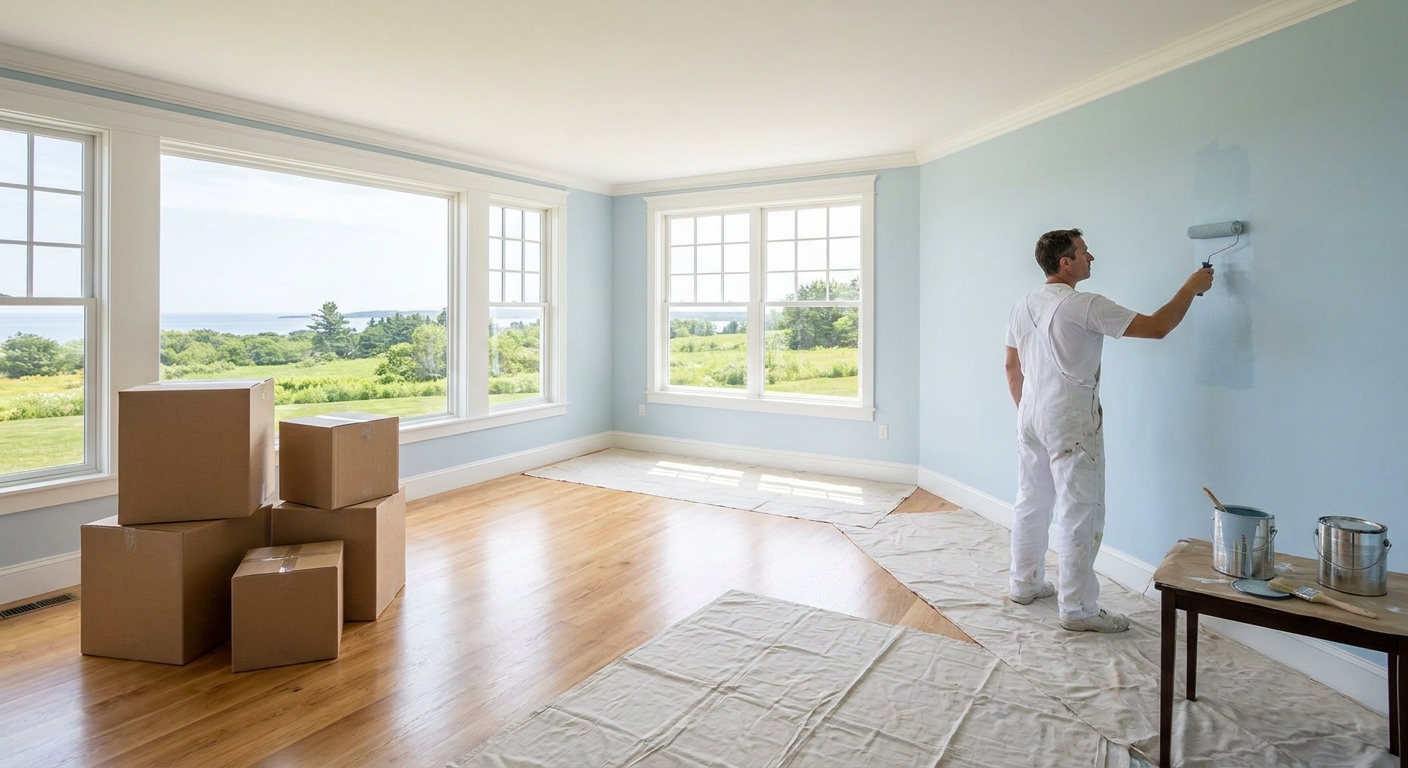
So here's where we land on it. If you can swing the job before move-in day, do it. The house is empty, the fumes clear out before anyone sleeps there, and you're not dragging a couch back and forth to hit the baseboards. Just don't treat it like a side project you'll knock out in an afternoon. Every wall needs prep. Every color needs a second look in real light. And every decision should be made with your actual life in mind—not just what looked good on the swatch.
Empty Rooms Make Everything Easier
There's a reason pros charge less when a place is vacant. No furniture to wrap, no rugs to pull, no lamps to disconnect. You've got wall-to-wall access and zero obstacles between the roller and the drywall. That means faster work, cleaner lines, and way less masking tape holding your life together.
It also means mistakes don't cost you. Drop cloth slips? No problem—there's nothing underneath it. Overspray from the sprayer? Wipe it and move on. The room works for you instead of against you, and that efficiency compounds when you're doing multiple spaces or hiring a crew on a deadline.
Fumes Clear Out Before You Sleep There
Even the low-VOC stuff smells. Maybe not as bad as the oil-based nightmare your parents used in the '80s, but it's still paint. Off-gassing takes time, and you don't want to be breathing it in while you're trying to unpack or get the kids to bed in a new place.
Painting before the move gives the house time to air out. Crack the windows, run a fan, let it breathe for a few days. By the time your mattress hits the floor, the air's clean and the walls are dry. No headaches, no lingering chemical smell stuck in the curtains you haven't even hung yet.
Your Stuff Stays Safe
We've all seen it—the dining chair with the white speck on the leg, the hardwood with the dried drip no one caught in time. Painting around belongings is a gamble, and even the most careful crew can miss a spot or knock over a tray.
Do it before move-in and none of that matters. No risk to your furniture, your electronics, or that rug you overpaid for because it was the only one that fit the space. Everything stays in storage or at the old place until the job's done, and you're not spending your first week in the new house scrubbing paint off anything.
When the Timeline Doesn't Cooperate
Not everyone gets the luxury of a gap between closing and moving day. Sometimes the lease ends, the truck's booked, and you're in whether the walls are ready or not. If that's your situation, don't force it. A rushed paint job looks worse than builder beige, and touch-ups under furniture are a pain you don't need three months in.
There's also the question of whether you actually know what you want yet. Walk through an empty house and colors feel different. The light shifts throughout the day, the ceiling height plays tricks, and what worked in your last place might fall flat here. Waiting a few weeks to live in the space isn't a failure—it's being smart about a decision you'll be looking at every single day.
What to Lock Down Before the Painters Show Up
- Color samples tested on the actual walls, not just the card from the store
- Finish type for each room—flat for ceilings, eggshell or satin for most walls, semi-gloss for trim and doors
- Confirmation that any repairs or patches are done first—paint won't hide bad drywall
- Clear timeline from the crew, with start and finish dates you can count on
- Ventilation plan, especially if you're painting multiple rooms or using anything oil-based
DIY or Hire It Out
If you've got the time, the tools, and a tolerance for tedious prep work, painting your own place can save serious money. But it's not just about slapping color on drywall. You're taping, priming, cutting in around trim, doing second coats, and cleaning up afterward. Most people underestimate the hours by half.
Hiring a crew costs more upfront, but they're done in days instead of weeks. They've got the sprayers, the scaffolding, the experience to handle textured ceilings or tricky corners. And if something goes wrong—drips, uneven coverage, missed spots—they fix it before they leave. For most buyers juggling work, family, and a move, that peace of mind is worth the invoice when you work with residential painting professionals.
Budget Traps to Avoid
- Buying cheap paint to save a few bucks, then needing three coats instead of two
- Skipping primer on dark walls or fresh drywall and watching your color come out uneven
- Not accounting for trim, doors, or closets in your square footage estimate
- Hiring the lowest bidder without checking reviews or asking for references
- Forgetting to factor in time off work if you're doing it yourself
What Happens If You Wait
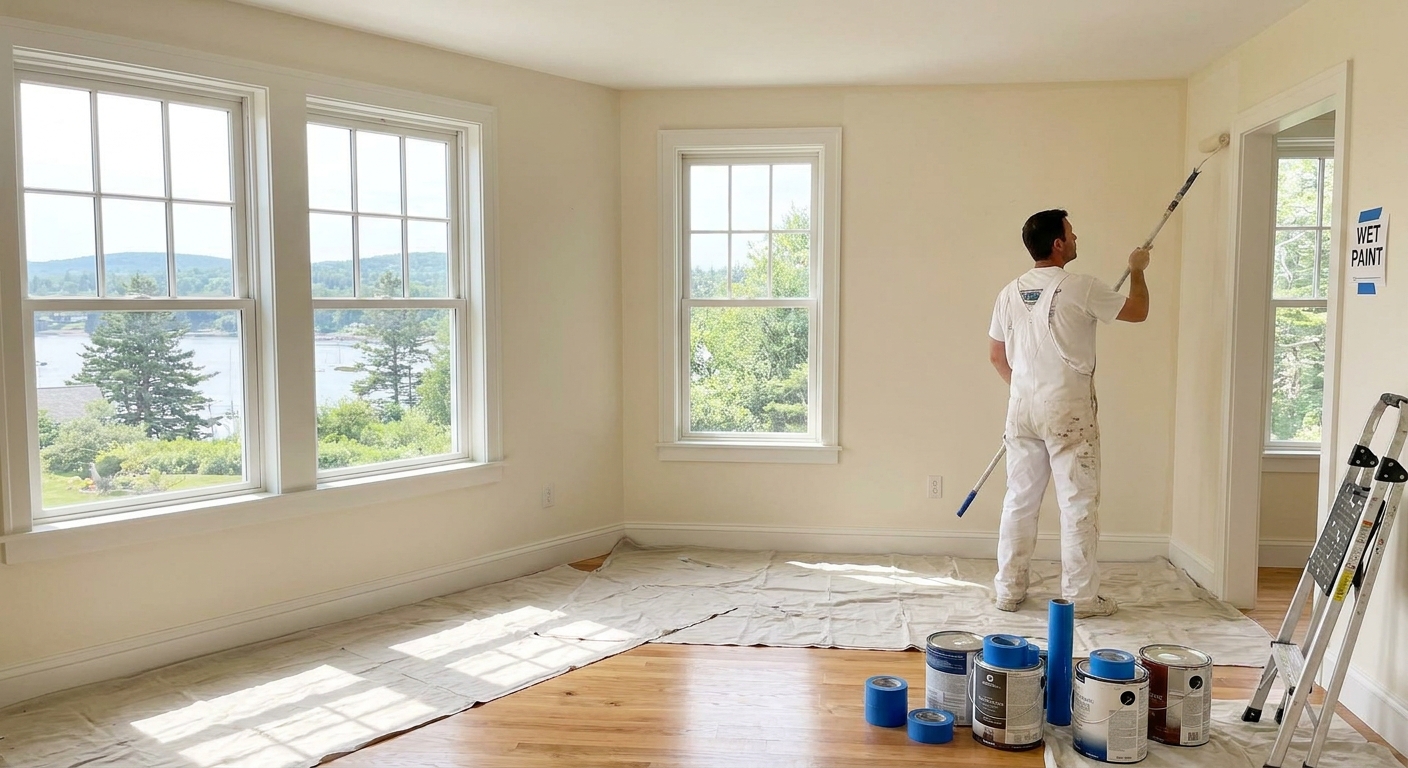
Plenty of homeowners paint after moving in. It's messier, slower, and you're living in a construction zone for a while—but it's doable. You'll need to move furniture room by room, cover everything that isn't nailed down, and probably take a few extra days because you can't work around the clock like a vacant house allows.
The upside? You know exactly how the space functions. You've seen the morning light in the kitchen, the shadows in the living room at sunset, the way your couch looks against that back wall. If color accuracy matters more to you than convenience, waiting gives you the information you need to choose the perfect color palette the first time.
Rooms Worth Prioritizing
- Bedrooms, since you'll spend the most time staring at those walls
- Main living areas where guests will actually see your taste
- Kitchens and bathrooms if the current color is dated or stained
- Entryways and hallways that set the tone for the rest of the house
- Any space with dark or bold builder colors you can't live with
Common Mistakes That Cost Time
- Picking colors in the store under fluorescent lights instead of testing them in your actual space
- Not letting the first coat dry fully before starting the second
- Taping over dust or dirt and watching the tape peel off mid-job
- Overloading the roller and ending up with drips or uneven texture
- Painting in freezing temps or high humidity and dealing with adhesion problems later
Call It Before the Truck Rolls
If you're going to paint before moving into your Lincolnville home, lock it in early. Get quotes, pick your colors, and schedule the work the week you close if possible. The window between ownership and occupancy is short, and once your stuff's inside, the job gets ten times harder.
But if the timing doesn't line up or you'd rather see how you use the space first, don't sweat it. Paint can wait. Just know that when you do pull the trigger, it's going to take longer and cost more disruption than it would have on day one. Either way, make the call based on your actual situation—not what sounds good in theory. Fresh walls matter, but so does sanity during a move.
Whether you need interior painting before you settle in or want to explore getting your midcoast home ready for interior painting, having a clear plan makes all the difference. You can always get a quote to better understand timing and budget before your move-in date, and if you want to see examples of completed work in the area, check out our photo gallery for inspiration.
Let’s Make Your Move-In Seamless
We know how much smoother the transition feels when your new home is freshly painted and ready for your family. Let’s take the stress out of your move and handle the painting before you unpack a single box. If you’re ready to talk colors, timing, or just want honest advice, give us a call at 207-323-3374. When you’re set to take the next step, you can always get a quote and we’ll help you start your Lincolnville home off right.
‹ Back